What You’ll Learn
- What is Anemia in Children?
- Why Children are Prone to Anemia
- Common Causes of Anemia in Children
- Symptoms of Anemia in Children
- Why Untreated Anemia in Children is Serious
- How Homeopathy Supports Anemia Care in Children
- Commonly Discussed Homeopathic Remedies
- Iron-Rich Diet for Children
- When to See a Doctor
- Note from the Clinic
- Conclusion
- Frequently Asked Questions
Introduction
As a parent, you know your child better than anyone. So when they seem unusually tired, lose interest in playing, look paler than usual, or struggle to focus at school, it is natural to worry. Often these small changes are easy to brush off, but sometimes they point to anemia, one of the most common health issues in growing children.
The good news is that anemia in children is very treatable, especially when caught early. Many parents also prefer gentle, natural options for their little ones. Homeopathic treatment for anemia in children offers supportive, individualized care that works alongside good nutrition and your doctor’s guidance.
In this guide, we explain why children develop anemia, what signs to look for, and how homeopathy can gently support your child’s health. If you would like to understand the condition more broadly, you can also read our complete guide on homeopathic treatment for anemia in women.
What is Anemia in Children?
Anemia simply means there are not enough healthy red blood cells, or enough hemoglobin, to carry oxygen around the body. In everyday language, it is often called “khoon ki kami,” or low blood.
Children grow quickly, and their bodies need plenty of iron and nutrients to keep up. When they do not get enough, their hemoglobin levels can fall, and anemia develops. Because growth is so rapid in the early years, children are one of the groups most affected by anemia worldwide.
Why Children are Prone to Anemia
There are a few reasons anemia is so common in childhood:
- Rapid growth means a child’s body constantly needs more iron than usual.
- Picky eating is common, and many children simply do not get enough iron-rich food.
- Drinking too much cow’s milk can make it harder for the body to absorb iron.
- Babies born prematurely often start life with lower iron stores.
- If the mother had anemia during pregnancy, the baby may be born with low reserves too. You can read more in our guide on homeopathic treatment for anemia during pregnancy.
Common Causes of Anemia in Children
Anemia in children usually comes down to one or more of these:
- A diet low in iron-rich foods
- Fast growth phases, when the body needs more iron than the child’s food provides
- Intestinal worms or repeated infections, which are common causes in many parts of the world
- Poor absorption of iron from food
- Less commonly, an underlying health condition
In many children, more than one factor is involved at once, which is why a proper check-up with a doctor matters so much.
Symptoms of Anemia in Children
The signs can be hard to notice at first, because they build up slowly.
Things to watch for include:
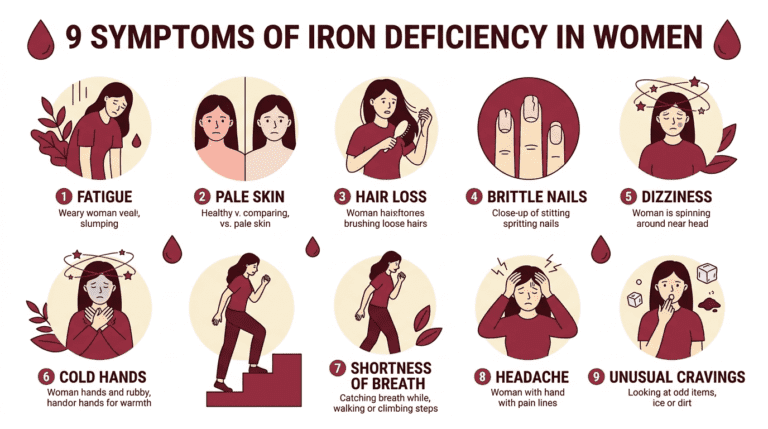
- Looking pale, especially the lips, inner eyelids, and nail beds
- Tiredness and less interest in playing or activity
- Irritability or frequent crankiness
- Poor appetite
- Difficulty concentrating at school
- Getting sick more often than usual
- Craving non-food items like soil, chalk, or ice (a condition called pica)
If you notice several of these together, it is worth mentioning to your doctor. You can also learn more about the early signs in our guide on iron deficiency symptoms in women, many of which apply to children too.
Why Untreated Anemia in Children is Serious
This is the part to take seriously. Mild anemia is common and very treatable, but if it is ignored, it can affect more than just energy levels.
In children, ongoing anemia can interfere with healthy growth and development. Severe or long-term anemia has been linked to poorer concentration, slower learning, and effects on physical and mental development. This is exactly why it should never be left unchecked, and why a doctor should always be involved in your child’s care.
Homeopathy, in this setting, is best used as gentle supportive care alongside proper nutrition and medical guidance, never as a replacement for the treatment your child may need.
How Homeopathy Supports Anemia Care in Children
Homeopathy looks at the whole child, their energy, appetite, sleep, mood, and overall constitution, rather than focusing on one symptom alone. The aim of homeopathic treatment for anemia in children is to gently support the body’s strength and overall wellbeing.
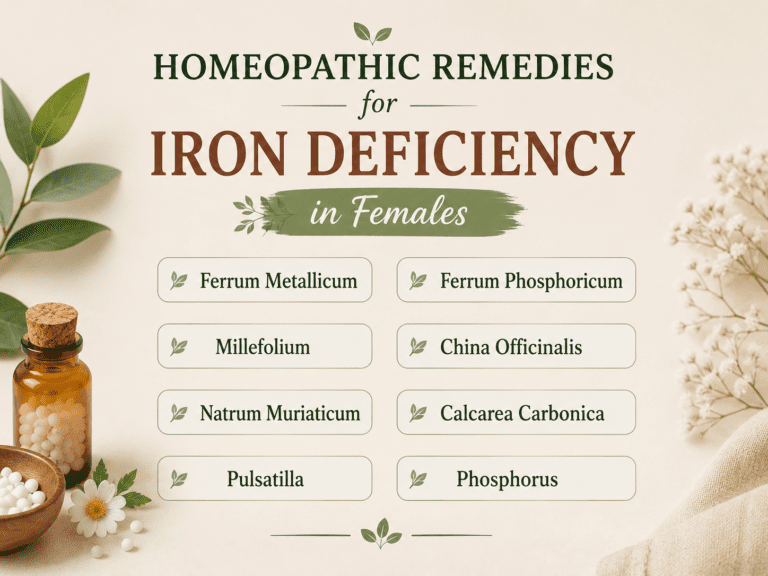
A qualified homeopathic doctor chooses any remedy individually, based on the child’s specific symptoms and health. Some studies have explored well-known remedies such as Ferrum phosphoricum and Ferrum metallicum in children with iron deficiency anemia, which adds to the interest in this gentle approach. Even so, homeopathic care works best as a complement to a healthy, iron-rich diet and your doctor’s advice.
Commonly Discussed Homeopathic Remedies
In homeopathy, the remedy is always matched to the individual child, not just the condition. A homeopath selects it based on the child’s unique symptoms, temperament, and general health.
-
Ferrum Phosphoricum
One of the most commonly mentioned remedies for anemia in children, often considered a gentle way to support hemoglobin. It tends to suit pale, easily tired children.
Indicated in:
- Paleness with mild weakness
- Tiredness and low energy
- A tendency to catch colds and mild fevers
- Anemia in the early stages
-
Calcarea Phosphorica
A helpful remedy when anemia is linked to rapid growth or poor nutrition. It is often considered for children and teenagers who grow quickly and tire easily.
Indicated in:
- Weakness during growth spurts
- Slow recovery and low stamina
- Poor appetite with anemia
- Weak bones and delayed development
-
Ferrum Metallicum
A primary remedy for anemia, suited to children who look pale and weak yet flush red in the face at the slightest exertion or excitement.
Indicated in:
- Marked paleness with general weakness
- Sudden flushing of the face
- Shortness of breath on mild activity
- Tiredness with low energy
-
Calcarea Carbonica
Often suited to softer, chubbier children who feel the cold easily and tire quickly. There may be sweating on the head during sleep and a generally slow pace of growth.
Indicated in:
- Chilliness with cold hands and feet
- Sweating on the head, especially during sleep
- Slow growth and easy tiredness
- An anxious, easily overwhelmed nature
-
China (Cinchona Officinalis)
This remedy is traditionally considered when weakness follows an illness, diarrhea, or any loss of body fluids, leaving the child drained and faint.
Indicated in:
- Weakness after illness or fluid loss
- Frequent faintness or dizziness
- Extreme tiredness and debility
- Sensitivity with bloating
-
Natrum Muriaticum
Often suited to thin children who stay weak despite eating well, with paleness and sometimes a quiet, sensitive nature.
Indicated in:
- Paleness with weakness despite a good appetite
- A thin build that is slow to gain strength
- Headaches with low energy
- A reserved, sensitive temperament
-
Silicea
A useful remedy when a child does not seem to absorb nourishment well, staying pale and run-down with a tendency to frequent minor infections.
Indicated in:
- Paleness from poor absorption of nutrients
- Low stamina and frequent small infections
- Tiredness with a delicate constitution
- Slow recovery after illness
Important note: Never give any homeopathic remedy or medicine to a child on your own. Children are delicate, and the right remedy and strength depend on a proper evaluation by a qualified homeopathic doctor, working alongside your child’s regular doctor. Always seek professional advice first.
Iron-Rich Diet for Children
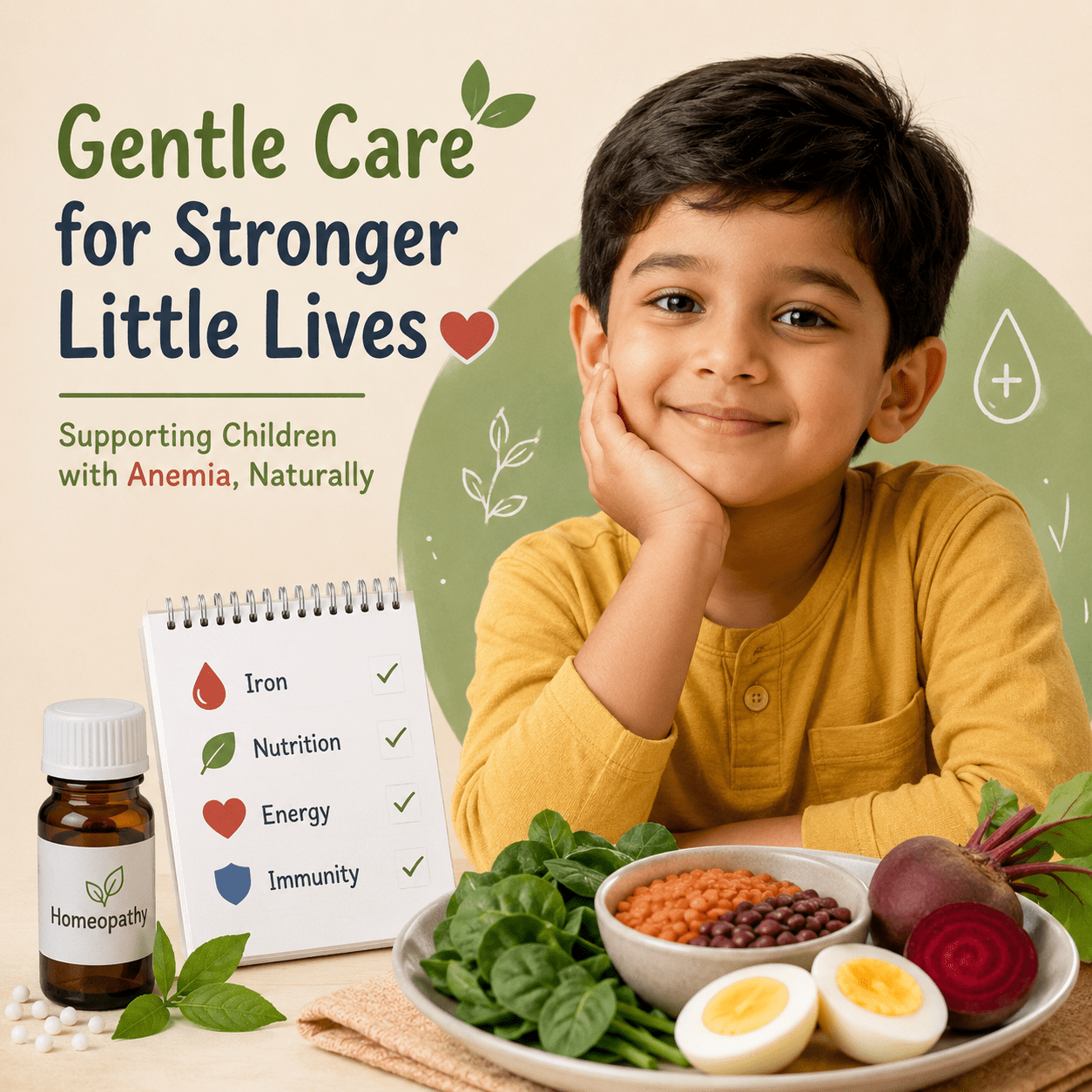
Food is one of the most powerful tools against anemia in children. Try to include simple, iron-rich foods in their daily meals:
- Eggs
- Green leafy vegetables, such as spinach (palak)
- Lentils and beans (daal)
- Dates (khajoor) and raisins
- Well-cooked lean meat and liver, in moderation
- Foods rich in vitamin C, such as oranges and other citrus fruits, which help the body absorb iron
A helpful tip for picky eaters: pair iron-rich foods with a little vitamin C, and try to limit milk around mealtimes, as too much can reduce iron absorption. Small, consistent changes often work better than big ones.
When to See a Doctor
With children, it is always better to be safe. Speak to your doctor if your child:
- Looks very pale or unusually tired
- Has lost interest in eating or playing
- Is falling behind at school or struggling to concentrate
- Seems to be getting sick more often
- Shows any sign that worries you
Routine check-ups will often catch anemia early, so keep up with your child’s regular visits.
Note from the Clinic
Watching your child feel low on energy is hard for any parent. The good news is that anemia in children is easy to manage once the cause is found.
At Binte Shifa, our care is always gentle and centered on your child’s wellbeing, working hand in hand with your doctor, never in place of proper medical care.
Conclusion
Homeopathic treatment for anemia in children can offer gentle, supportive care that complements good nutrition and medical attention. By caring for the whole child, homeopathy aims to help little ones feel stronger, brighter, and more themselves again.
If you have noticed the signs of anemia in your child, do not ignore them. Speak to your doctor, and consider a homeopathic consultation for supportive, individualized care.
Frequently Asked Questions
Is homeopathy safe for children?
Homeopathic remedies are gentle, but for children they should only be used under the guidance of a qualified homeopathic doctor, alongside your child’s regular medical care.
What are the first signs of anemia in a child?
Common early signs include paleness, tiredness, irritability, poor appetite, and less interest in playing.
Which homeopathic remedy is best for anemia in children?
There is no single best remedy. A homeopath chooses it based on each child’s symptoms and constitution. Ferrum phosphoricum and Calcarea phosphorica are among the commonly considered ones, but the right choice should always be made by a qualified doctor.
At what age can children take homeopathic remedies for anemia?
Homeopathic remedies are generally considered gentle and can be used across different age groups, but for infants and young children they should only ever be given under the guidance of a qualified homeopathic doctor.
What foods increase iron in children?
Eggs, spinach, lentils, dates, and well-cooked lean meat are good sources, especially when paired with vitamin C foods like oranges.
Can too much milk cause anemia in children?
Drinking large amounts of cow’s milk can reduce iron absorption and is a common contributing factor, so it helps to keep milk balanced with iron-rich foods.
When should I take my child to a doctor for anemia?
See your doctor if your child looks very pale, is unusually tired, is not eating or playing normally, or shows any sign that concerns you.
Consult Dr. Asia
Have a health concern? Book a free consultation with Dr. Asia Nazir, a BHMS-qualified homeopathic physician.