What You’ll Learn
- What is Menopause?
- Stages of Menopause
- Common Causes and Hormonal Changes
- Symptoms to Watch For
- Homeopathic Treatment for Menopause in Pakistan
- Best Homeopathic Remedies for Menopause
- Diet and Lifestyle Tips
- When to See a Doctor
- Frequently Asked Questions
- Conclusion
- Note from the Clinic
Introduction
Menopause is often talked about in whispers, or not talked about at all. Many women quietly push through hot flashes, sleepless nights, and mood swings, assuming it is simply something to endure rather than a natural transition that deserves real support.
Menopause is not an illness. It is a normal stage in every woman’s life, marking the end of her reproductive years. But normal does not mean it has to be difficult. With the right understanding and gentle support, this transition can be far more comfortable than most women expect.
Homeopathic treatment for menopause works by supporting the whole person through this hormonal shift, easing physical symptoms like hot flashes while also addressing the emotional ups and downs that often come with it. In this guide we explain what menopause is, why symptoms happen, and how homeopathy can offer natural relief.
What is Menopause?
Menopause is officially confirmed when a woman has gone twelve consecutive months without a period. It typically happens between the ages of 45 and 55, with the average age being around 51, though the exact timing varies from woman to woman.
It marks the point at which the ovaries stop releasing eggs and significantly reduce their production of estrogen and progesterone, the hormones that have driven the menstrual cycle for decades.
Stages of Menopause
Menopause is not a single event but a gradual process with three distinct stages:
- Perimenopause The transition phase leading up to menopause, which can last several years. Periods become irregular, and many of the classic symptoms, hot flashes, mood swings, sleep disturbances, begin during this stage rather than after periods stop.
- Menopause The point at which periods have been absent for twelve consecutive months. This is when menopause is officially confirmed.
- Postmenopause The years following menopause. Many symptoms ease during this stage, but the drop in estrogen brings longer-term considerations, particularly for bone and heart health.
During the transition, the amount of hormones your ovaries make varies. Perimenopause can last 2 to 8 years. The average is about four years.
Understanding which stage you are in helps make sense of the symptoms you are experiencing and what kind of support is most useful.
Common Causes and Hormonal Changes
Menopause happens for a few different reasons:
- Natural ovarian ageing The most common cause. As a woman ages, her ovaries gradually produce less oestrogen and progesterone until periods stop altogether.
- Surgical menopause Removal of the ovaries, sometimes done alongside a hysterectomy, causes menopause to begin immediately rather than gradually.
- Premature or early menopause Some women reach menopause before 45, sometimes due to genetics, autoimmune conditions, or as a side effect of certain medical treatments such as chemotherapy.
Whatever the cause, the underlying shift is the same, declining oestrogen and progesterone, which is why symptoms tend to overlap regardless of how menopause was reached.
Symptoms to Watch For
Symptoms vary widely from woman to woman, both in type and severity. Common signs include:
- Hot flashes and night sweats
- Irregular periods during perimenopause, which we also cover in our guide on irregular periods
- Mood swings, irritability, or low mood
- Sleep disturbances
- Vaginal dryness and reduced libido
- Weight gain, particularly around the abdomen
- Joint aches and stiffness
- Brain fog or difficulty concentrating
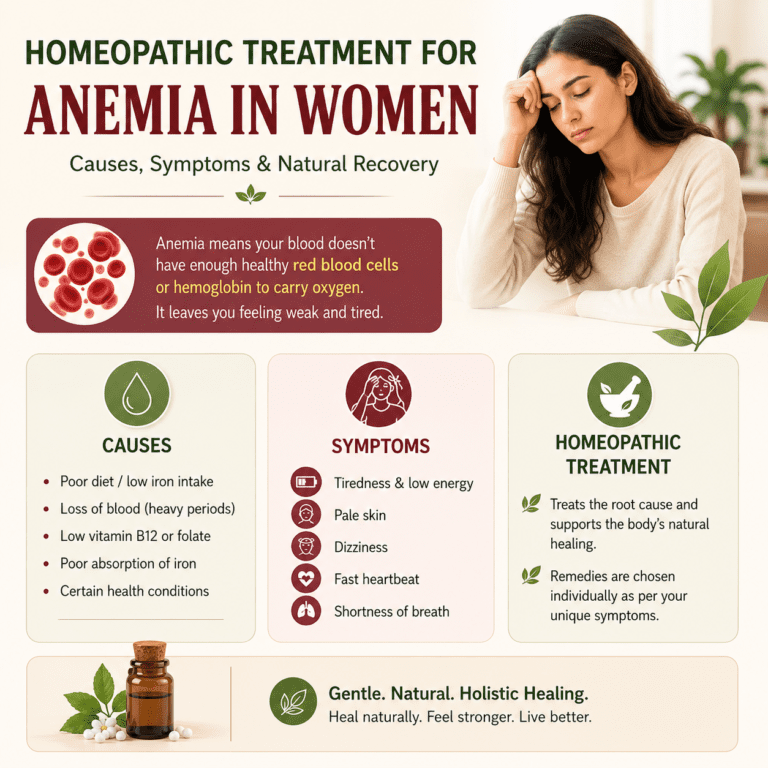
If perimenopause brings heavier than usual bleeding alongside fatigue, it may also be worth reading our guide on homeopathic treatment for anemia in women, since heavy cycles and low iron often occur together.
Homeopathic Treatment for Menopause in Pakistan
Homeopathy is widely trusted in Pakistan for women’s health concerns at every life stage, and menopause is no exception. Many women look for a gentle, natural option rather than turning straight to hormone replacement therapy, which is not suitable or desired by everyone.
It helps to understand one thing clearly. Menopause affects every woman differently, in symptoms, severity, and emotional impact. In true homeopathic care, the remedy is always chosen for the individual, not the life stage alone. Two women going through menopause at the same time may need entirely different remedies, depending on their specific symptom pattern and constitution.
This is why a personalized consultation with a qualified homeopath gives far better and longer-lasting results than a one-size-fits-all approach.
Best Homeopathic Remedies for Menopause
In homeopathy, the remedy is matched to the person and the specific character of their symptoms. A doctor chooses it based on the nature of the hot flashes, the emotional pattern, and the woman’s overall health. Some of the commonly used remedies are below. The exact remedy and its strength should always be decided by a homeopathic doctor, never on your own.
-
Sepia
One of the most frequently prescribed remedies for menopause overall.
Indicated in:
- Hot flashes with sweating and sudden weakness
- Dragging sensation in the lower abdomen
- Emotional exhaustion, irritability, or indifference toward family
- Reduced interest in intimacy
-
Lachesis
Suited to intense hot flashes that disturb sleep.
Indicated in:
- Hot flashes worse on falling asleep or on waking
- A rush of blood to the head with drenching sweats
- Talkativeness and a feeling of constriction, especially around the neck
- Relief from cool, open air
-
Pulsatilla
Considered where mood swings and tearfulness are prominent.
Indicated in:
- Changeable, shifting moods with easy crying
- Periods that were sometimes late and scanty, other times heavy
- A gentle, sensitive emotional state
- Symptoms that ease with comfort and open air
-
Sulphur
Useful for frequent hot flashes with a strong sensation of heat.
Indicated in:
- Hot flashes with heat spreading through the whole body
- Night sweats, particularly around the neck and back of the head
- A sensation of emptiness in the stomach
- Skin that feels hot to the touch
-
Belladonna
Indicated for sudden, intense hot flashes with visible flushing.
Indicated in:
- Sudden hot flashes with a red, flushed face
- Throbbing headaches accompanying the flush
- Sensitivity to light and noise
- Symptoms that come on and pass quickly
-
Calcarea Carbonica
Suited to a chilly, sluggish constitution with a tendency to gain weight.
Indicated in:
- Chilliness alongside occasional hot flashes
- Weight gain during or after menopause
- Difficulty concentrating
- Slow to feel alert in the morning
-
Natrum Muriaticum
Considered when vaginal dryness is a leading concern.
Indicated in:
- Vaginal dryness, itching, or discomfort
- Reduced libido and aversion to intimacy
- A tendency to withhold emotions
- Headaches linked to hormonal shifts
Important: these remedies are shared for informational purposes only. Homeopathic treatment for menopause should always be prescribed and supervised by a qualified homeopath after a full case evaluation. Self-medicating without proper diagnosis is not recommended, since the correct remedy depends on your complete symptom picture, not just a single symptom in isolation.
Diet and Lifestyle Tips
Good daily habits can meaningfully ease the menopause transition:
- Eat calcium and vitamin D-rich foods such as dairy, leafy greens, and fortified foods to support bone health.
- Include phytoestrogen-rich foods like soy, flaxseed, and chickpeas, which may help ease hot flashes for some women.
- Dress in layers and keep your environment cool to manage hot flashes more comfortably.
- Stay physically active, particularly with weight-bearing exercise, to support bone density.
- Manage stress through rest, prayer, or gentle breathing exercises.
- Limit caffeine, alcohol, and spicy food, which can trigger or worsen hot flashes for some women.
These steps will not replace treatment, but they help your body move through this transition more comfortably.
When to See a Doctor
Most menopause symptoms are a normal part of this transition, but some signs need prompt medical attention. See a doctor if you notice:
- Any bleeding after menopause has been confirmed for twelve months
- Very heavy or unusually prolonged bleeding during perimenopause
- Symptoms severe enough to significantly disrupt daily life
- Concerns about bone health, especially with a family history of osteoporosis
Homeopathic care for menopause works best as supportive treatment alongside regular medical check-ups, never as a replacement for them.
Frequently Asked Questions
What is the best homeopathic medicine for menopause symptoms?
There is no single medicine that suits everyone. In homeopathy, the remedy is chosen for the individual based on the nature of the hot flashes, emotional pattern, and overall health. Commonly used remedies include Sepia, Lachesis, Pulsatilla, and Sulphur, but the right one should always be selected by a qualified homeopath.
How long do menopause symptoms last?
This varies significantly between women. Some experience symptoms for only a year or two, while others notice hot flashes and other symptoms for several years. Individualized treatment can help make this period more manageable regardless of its length.
Can homeopathy help with hot flashes?
Yes, many women use homeopathic remedies specifically for hot flashes, and a clinical observational study found that remedies such as Lachesis, Belladonna, Sepia, Sulphur, and Sanguinaria were commonly and effectively used for this purpose. The right remedy depends on the exact pattern and triggers of your hot flashes.
Is bleeding after menopause normal?
No. Once menopause is confirmed, meaning twelve consecutive months without a period, any further vaginal bleeding is not considered normal and should be evaluated by a doctor promptly to rule out underlying causes.
Conclusion
Menopause is a natural chapter, not something to silently endure. Understanding which stage you are in and what is driving your symptoms is the first step toward genuine relief.
Homeopathy offers a gentle, natural way to support your body and mind through this transition, easing hot flashes, mood swings, and other symptoms at their root. With the right remedy, supportive lifestyle habits, and proper medical guidance, this stage of life can be met with far more comfort than most women expect.
Note from the Clinic
At Binte Shifa Homeopathic Clinic, we understand that menopause can feel overwhelming when faced without support. Our approach focuses on easing your symptoms and restoring balance through gentle, personalized homeopathic care.
If you are navigating perimenopause or menopause, you do not have to go through it alone. Book a consultation with Dr Asia Nazir for safe, natural, and individual guidance.