What You’ll Learn
- What is Female Infertility?
- Common Causes of Female Infertility
- Symptoms and Signs to Watch For
- Homeopathic Medicine for Female Infertility in Pakistan
- Best Homeopathic Remedies for Female Infertility
- Diet and Lifestyle Tips to Support Fertility
- When to See a Doctor
- Frequently Asked Questions
- Conclusion
- Note from the Clinic
Introduction
For many women, the journey to becoming a mother does not go as expected. Month after month of trying without success can bring quiet heartbreak, along with pressure from family and a constant stream of unhelpful advice. It is one of the most emotionally difficult experiences a woman can face, and it is far more common than most people realize.
The good news is that difficulty conceiving is not always the end of the story. Many cases of female infertility are linked to an underlying, treatable cause, and gentle, natural support can make a real difference.
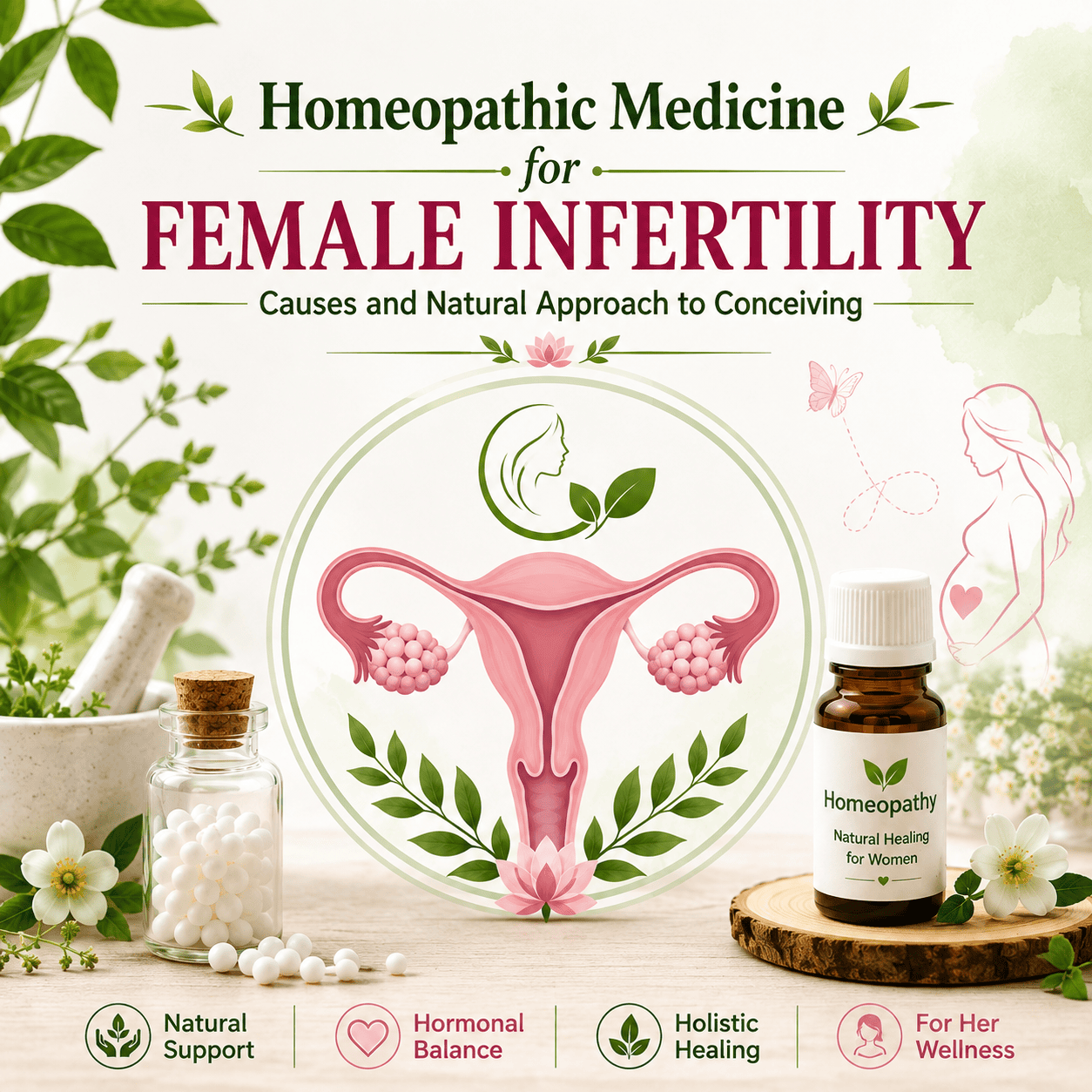
Homeopathic medicine for female infertility works by looking at the whole person, the menstrual pattern, hormonal balance, and general health, rather than treating conception as an isolated problem.
In this guide we explain what female infertility is, why it happens, and how homeopathy can offer natural support, always alongside proper medical evaluation.
What is Female Infertility?
Female infertility generally refers to being unable to conceive after one year of regular, unprotected intercourse. If a woman is over 35, doctors usually recommend seeking evaluation after six months, since fertility naturally declines with age.
Infertility can be primary, meaning a woman has never conceived, or secondary, meaning she has conceived before but is now struggling to do so again. Both forms can have similar underlying causes and can benefit from the same kind of careful evaluation.
Common Causes of Female Infertility
Female infertility does not happen for one single reason. Some of the most common causes are:
- Ovulation disorders Roughly a quarter of infertility cases involve irregular or absent ovulation, meaning the ovaries do not release an egg regularly.
- PCOS (Polycystic Ovary Syndrome) One of the most common hormonal causes of ovulation-related infertility. You can read more in our detailed guide on PCOS homeopathic treatment.
- Hormonal imbalance Disruptions in estrogen and progesterone can affect the whole cycle, which we also cover in our guide on irregular periods.
- Low ovarian reserve (AMH levels) Anti-Müllerian Hormone, or AMH, reflects how many eggs remain in the ovaries. Lower-than-expected AMH levels can make conception more difficult, and this has become one of the most searched concerns among women investigating infertility today.
- Fallopian tube blockages Scarring or blockages can prevent the egg and sperm from meeting.
- Uterine disorders Fibroids, endometriosis, or structural conditions like a septate uterus can interfere with implantation.
- Age-related factors Age-related factors Fertility naturally declines gradually after the early thirties, part of the same ovarian ageing process that eventually leads to menopause.
- Stress and lifestyle factors Chronic stress, poor sleep and significant weight changes can all disrupt the hormonal balance needed for conception.
In many cases more than one cause is involved at the same time, which is why a proper fertility work-up matters before starting any treatment approach.
Symptoms and Signs to Watch For
Not every woman with fertility difficulties has obvious symptoms, but common signs include:
- Irregular, absent or unpredictable periods
- Very painful periods
- Hormonal acne or excess hair growth
- Noticeable weight changes
- Pain during intercourse
If irregular or heavy periods are part of the picture, along with ongoing tiredness, it may also be worth reading our guide on homeopathic treatment for anemia in women, since heavy cycles and low iron often go hand in hand.
Homeopathic Medicine for Female Infertility in Pakistan
Homeopathy is widely trusted in Pakistan for women’s health concerns, because it is gentle and supports the body without harsh side effects. Many women look for a natural option to try alongside or before more invasive fertility treatments.
Here it is important to understand one thing. There is no single “fertility medicine” that works the same way for every woman. In true homeopathic care, the remedy is always chosen for the individual, not just for the diagnosis. Two women with the same complaint of infertility may need completely different remedies, depending on their menstrual pattern, general constitution, and the underlying cause.
This is why a personalized consultation with a qualified homeopath gives far better and longer-lasting results than picking a random product off the shelf.
Best Homeopathic Remedies for Female Infertility
In homeopathy, the remedy is matched to the person and their complete symptom picture. A doctor chooses it based on the menstrual pattern, general health, and the likely underlying cause. Some of the commonly used remedies are below. The exact remedy and its strength should always be decided by a homeopathic doctor, never on your own.
-
-
-
Pulsatilla
One of the top remedies for infertility linked to an irregular cycle since the very first period.
Indicated in:
- Delayed, unpredictable periods since menarche
- Scanty flow that lasts only a short time
- Infertility linked to PCOS
- Weepy, emotional and sensitive mood
-
Sepia
A leading remedy where periods are short, scanty or suppressed alongside a dragging sensation.
Indicated in:
- Short, scanty or suppressed periods
- Bearing-down sensation in the uterus
- Reduced interest in intimacy
- Exhaustion and low motivation
-
Agnus Castus
Considered when infertility comes with a noticeably low sex drive.
Indicated in:
- Decreased sexual desire
- General emotional flatness
- Relaxed pelvic tone
-
Calcarea Carbonica
Suited to infertility with heavy, prolonged periods.
Indicated in:
- Profuse, long-lasting periods
- Periods arriving earlier than expected
- Weight gain and tiring easily
- Feeling cold easily
-
Aletris Farinosa
Used where infertility comes with early, heavy periods and general depletion.
Indicated in:
- Early, copious periods
- Accompanying weakness, fatigue and low iron
- History of frequent miscarriage
-
Natrum Muriaticum
One of the most frequently indicated remedies in fertility cases overall.
Indicated in:
- Irregular or suppressed periods
- A tendency to withhold emotions or dwell on grief
- Low mood connected to the difficulty conceiving
-
Borax
Considered when vaginal discharge is affecting the chances of conception.
Indicated in:
- Discharge resembling egg white, warm and profuse
- Discomfort or irritation from the discharge
-
-
Important: these remedies are shared for informational purposes only. Homeopathic medicine for female infertility should always be prescribed and supervised by a qualified homeopath after a full case evaluation. Self-medicating without proper diagnosis is not recommended, since the correct remedy depends on your complete symptom picture, not just a single symptom in isolation.
Diet and Lifestyle Tips to Support Fertility
Good daily habits support your body alongside any treatment:
- Eat folate and iron-rich foods such as leafy greens, lentils, and dates.
- Maintain a healthy weight, as both being overweight and underweight can affect ovulation.
- Manage stress through rest, prayer, or gentle breathing exercises.
- Stay gently active, since moderate regular exercise helps balance hormones.
- Get enough sleep, since poor sleep disturbs hormonal rhythm.
- Cut down on excess caffeine and processed food.
These steps will not replace treatment, but they help create the best possible conditions for conception.
When to See a Doctor
While some couples conceive naturally with time, some signs call for prompt medical evaluation. See a doctor if:
- You have been trying to conceive for a year or more (six months if you are over 35)
- You have known conditions such as PCOS, fibroids, or endometriosis
- Your periods are very irregular or absent
- You experience significant pain during your cycle or during intercourse
Homeopathic support for infertility works best alongside proper medical evaluation, never as a replacement for it. A fertility work-up can identify treatable causes early, which improves outcomes considerably.
Frequently Asked Questions
Which medicine is best for female infertility?
There is no single medicine that suits everyone. In homeopathy, the remedy is chosen for the individual based on the menstrual pattern, underlying cause, and overall health. Commonly used remedies include Pulsatilla, Sepia, Natrum Muriaticum and Agnus Castus, but the right one should always be selected by a qualified homeopath.
What are the top 3 causes of female infertility?
The most common causes are ovulation disorders (including PCOS), hormonal imbalance affecting the menstrual cycle, and structural issues such as fallopian tube blockages or uterine conditions like fibroids and endometriosis. Age-related decline in ovarian reserve is also a significant factor for many women.
Can homeopathy increase AMH level?
AMH is influenced by many biological factors, and homeopathy should be viewed as gentle, supportive care rather than a guaranteed way to raise AMH levels. A fertility specialist can help track AMH alongside any treatment approach.
Can I take homeopathy medicine while trying to conceive?
Yes, homeopathic remedies are generally considered gentle and safe to take while trying to conceive, and many women use them specifically to support this process. As always, the right remedy and timing should be guided by a qualified homeopath.
Conclusion
Struggling to conceive is one of the most difficult experiences a woman can go through, but it does not have to be faced without support. Understanding the underlying cause, whether it is PCOS, a hormonal imbalance, or something else, is the first step toward a real solution.
Homeopathy offers a gentle, natural way to support your body’s fertility by addressing the root cause rather than treating conception as an isolated problem. With the right remedy, supportive lifestyle habits, and proper medical guidance, many women go on to conceive successfully.
Note from the Clinic
At Binte Shifa Homeopathic Clinic, we understand how deeply personal and emotional the journey to conceiving can be. Our approach focuses on finding the root cause and restoring your body’s natural balance through gentle, personalized homeopathic care.
If you are struggling to conceive, you do not have to go through it alone. Book a consultation with Dr Asia Nazir for safe, natural, and individual guidance.